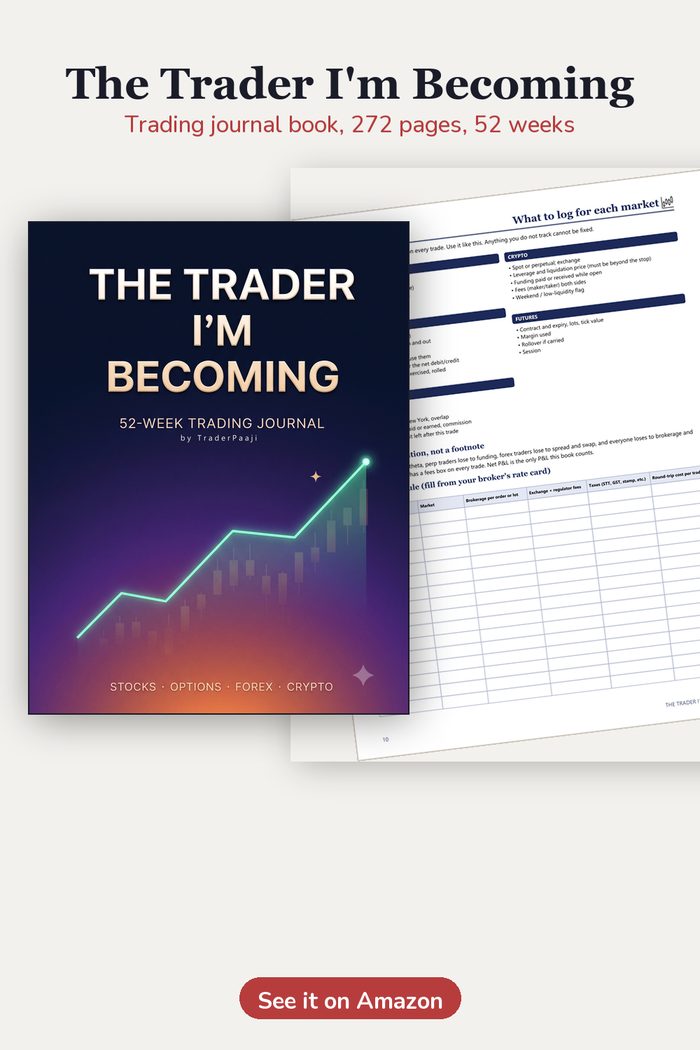
The Trader I'm Becoming
A 52-Week Trading Journal for Stocks, Options, Forex and Crypto. Plan Before You Enter, Review Before You Repeat.
Plan the trade on one page. Say why you took it on the next.
- 272-page paperback, 8.5 x 11 inches
- 52 weeks, for any market
- Eight setup pages and a position sizing sheet
- A mistake catalogue, emotion tags and a tilt protocol
- An equity curve and R distribution you draw yourself
Buy on Amazon
Printed and shipped by Amazon. Opens the book’s Amazon page.
Who it's for
Anyone who trades and wants a written record of what they did and why, kept by hand. Most traders repeat the same few mistakes. A journal is how you find out which ones are yours: the plan is written before the order, the result after, and every week is reviewed with the same honest questions until the pattern shows in your own handwriting.
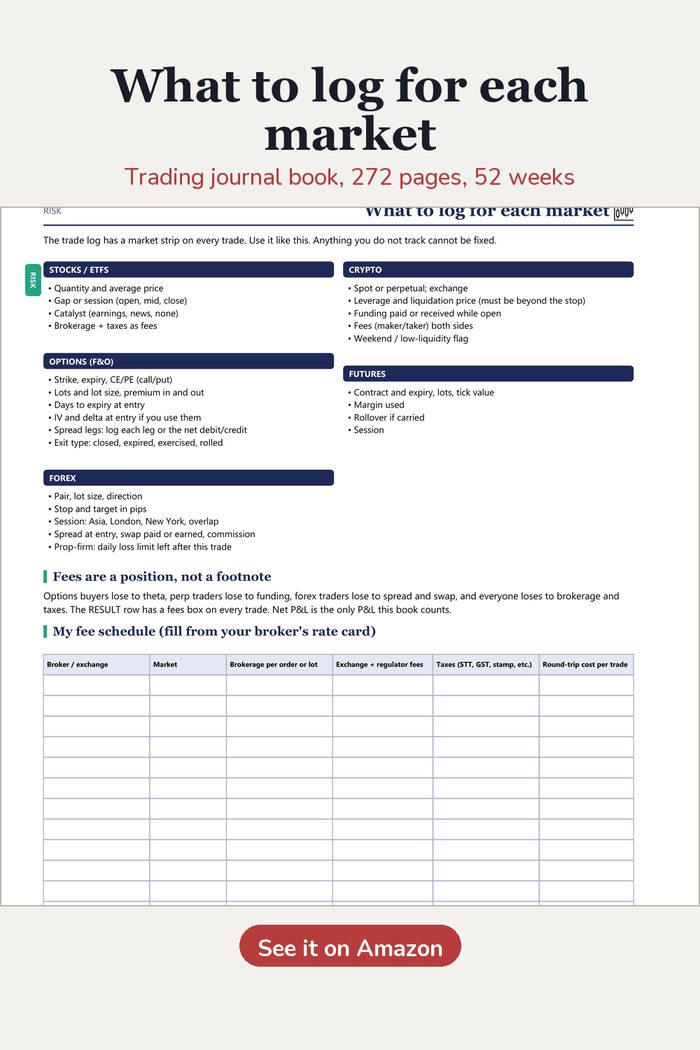
It works for stocks, options, futures, forex and crypto. Each trade row has a strip for what only those markets need, such as strike and expiry, lots and pips, session, leverage, funding and fees. It is undated, so you can start any Monday, and the weeks run seven days so weekend markets count.
It is a notebook. It contains no investment advice, no trading calls and no promise about results.
Inside the book
The named pages, in the order you meet them. Between them sit 52 weeks, each with a week planner, two pages of trade log and a weekly review.
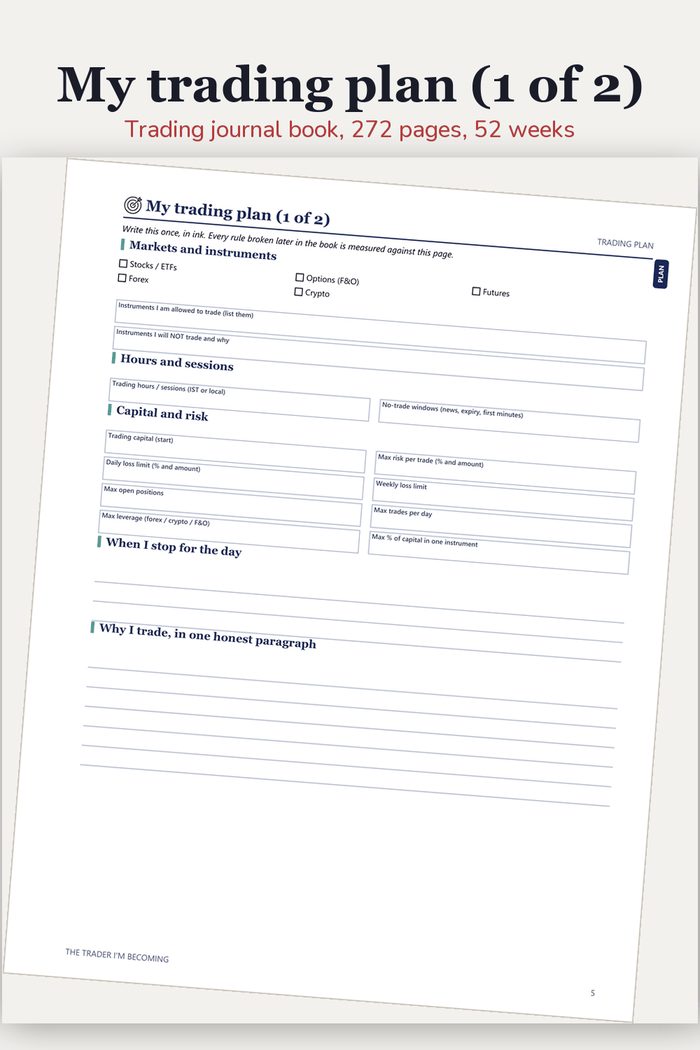
- My trading plan, over two pages
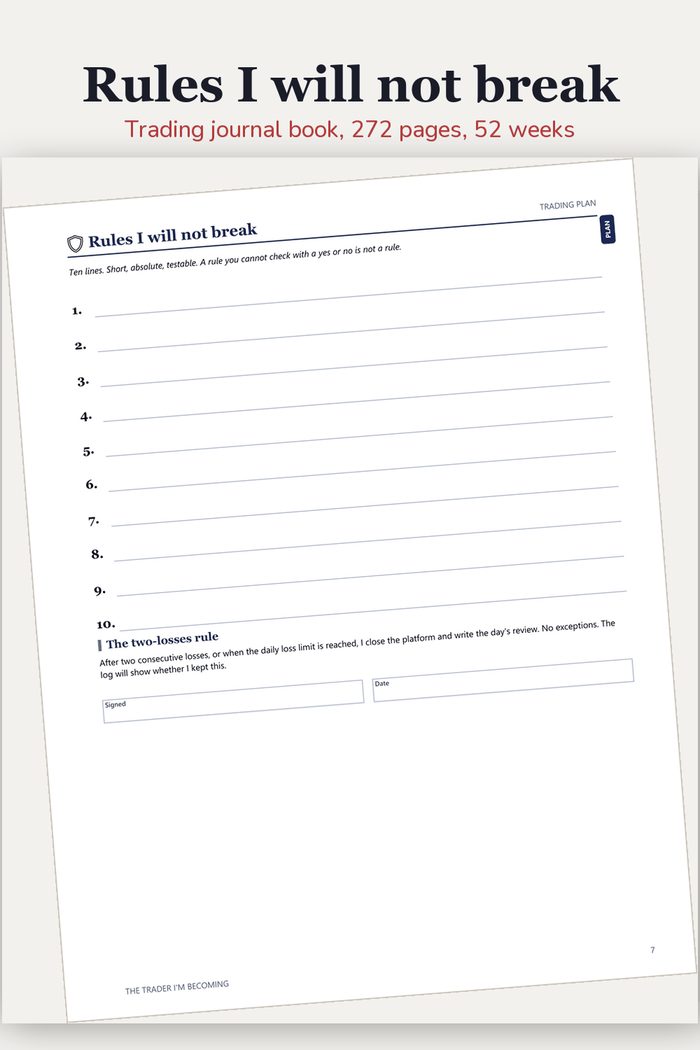
- Rules I will not break
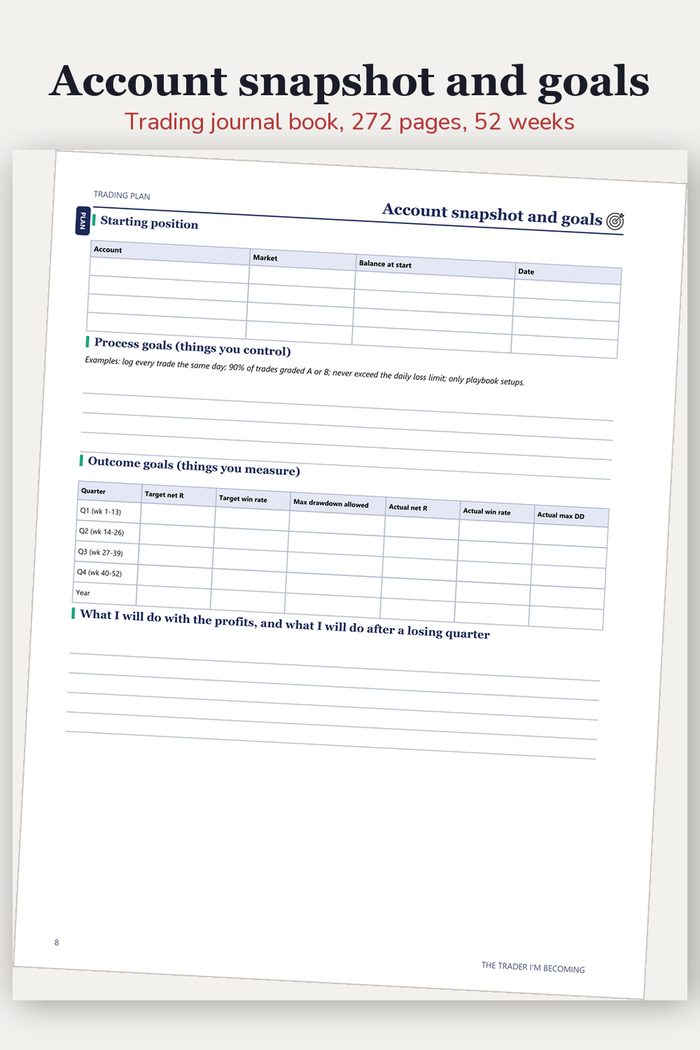
- Account snapshot and goals
- Position sizing cheat sheet
- What to log for each market
- Eight setup pages: your own playbook
- Mistake catalogue and tally
- Emotion tags and the tilt protocol
- A dashboard every four weeks, 13 in all
- Equity curve and R distribution
- A review at the end of every quarter
- Notes and lessons
- Year review: the numbers
- Year review: the lessons
How it works
- Before the trade, write the plan. The setup, the entry, where you are wrong and how much you are risking, on the PLAN row, before the order goes in.
- After the trade, write what happened. The RESULT row records the exit and the R-multiple: the result measured against what you planned to risk.
- Once a week, review. An emotion tally, mistake codes and one thing to change next week. It takes about fifteen minutes.
- Every four weeks, draw the picture. A dashboard by week, by setup and by market, an equity-curve grid you plot by hand, and an R-multiple histogram you shade one square at a time.
There is a longer guide to how to keep a trading journal if you are starting one for the first time.
Frequently asked questions
Does this journal tell me what to trade?
No. It is a record-keeping and self-review tool. It contains no investment advice and no trading calls. What you trade, and how, is entirely yours; the journal is where you write it down and look back at it.
How many trades does it hold?
Twelve trade rows a week across 52 weeks, 624 trades in all, on seven-day weeks.
Is it dated?
No. It is undated, so you can start on any Monday.
How big is it?
8.5 x 11 inches, 272 pages, colour interior and a glossy cover.