
It is three days before Diwali. There is homework on the table, paint from last year's diya has dried in the cupboard, somebody still needs a costume for school, and five festival days are coming whether the craft supplies are ready or not. This is the moment most searches for Diwali activities for kids really begin.
The real problem is rarely a shortage of ideas. It is too many ideas and too little ordinary family time.
So give each evening one small thing. Not a project to photograph. Something a child can finish, understand and point to when the night is over.
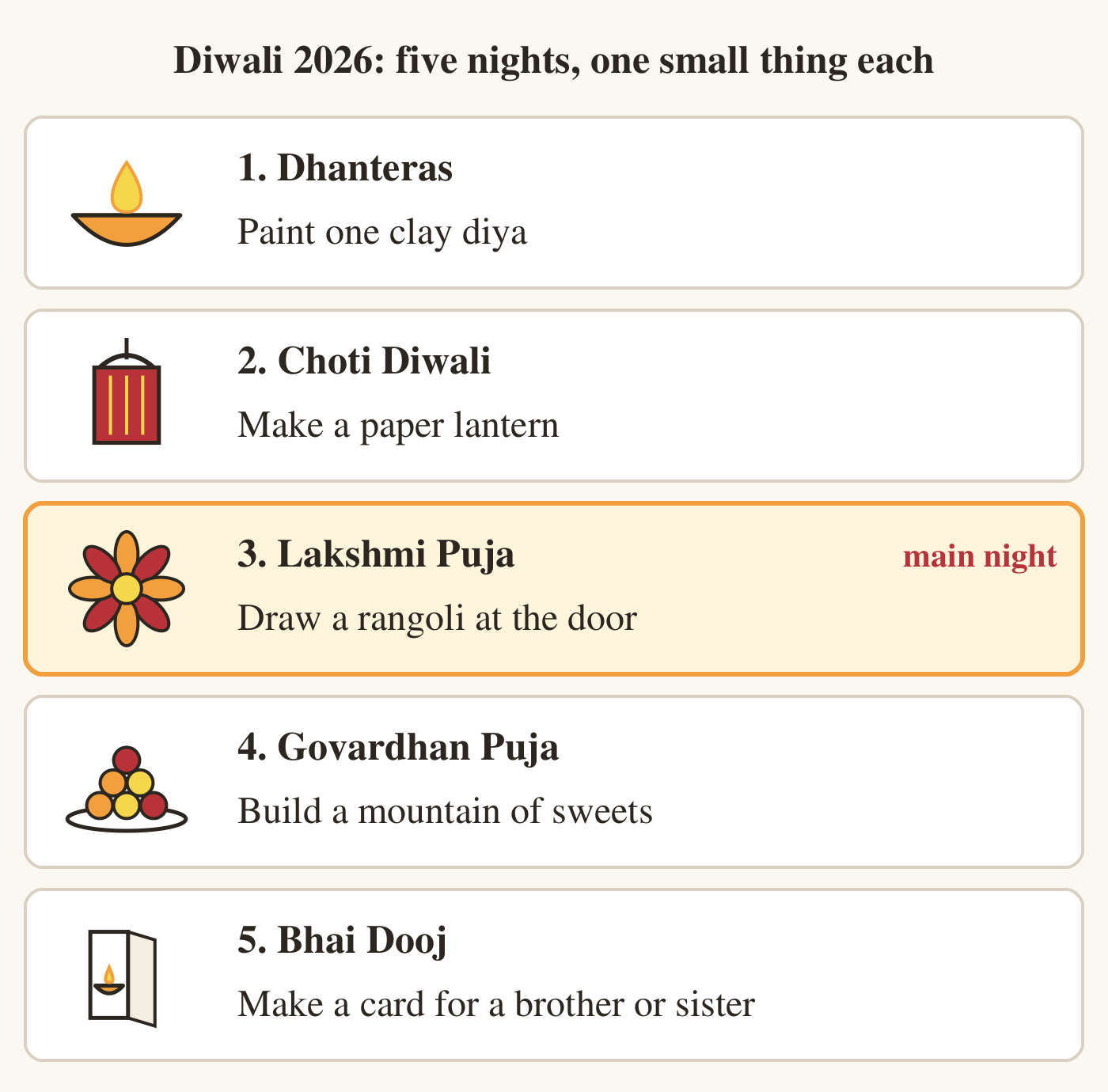
The short answer: Give each of the five days of Diwali one small activity. Paint a clay diya on Dhanteras, make a paper lantern on Choti Diwali, draw a rangoli for the main night of Lakshmi Puja, build a little mountain of sweets for Govardhan Puja, and make a card for a brother or sister on Bhai Dooj. In 2026 that runs from Friday 6 November to Tuesday 10 November.
Before the first night: what you need
Nothing here needs a special shop. Gather it the weekend before:
- Five plain clay diyas, or air-dry clay to make your own
- Poster or acrylic paint, and a cotton bud for dots
- A few sheets of colored paper, scissors, glue and string
- A cup of uncooked rice, food coloring and a splash of vinegar, for the rangoli
- A plate, and some fruit or sweets
- Card for greetings, and crayons or markers
- Battery tea lights for the youngest children, and for any lamp that sits where small hands can reach
Night one, Dhanteras: paint one lamp
Dhanteras opens the festival, and many families mark it by bringing something new into the house, often a small metal pot or utensil. For a child, the new thing can be a lamp they made themselves.
Give them one plain clay diya and let them decide how it should look: dots around the rim, a flower in the bowl, stripes, all of it. Unglazed clay drinks the first coat of paint, so it usually needs a second once the first is dry. Leave it overnight before it holds a flame or a tea light.
Then light a single lamp, switch the big lights off and tell the first two chapters of the Diwali story: the prince who kept his promise, and the golden deer. The whole story, told in six short chapters with a lesson line for each, is in our Diwali story for kids.
Tonight's small win: a lamp that is theirs, ready for the main night.
Night two, Choti Diwali: make a paper lantern
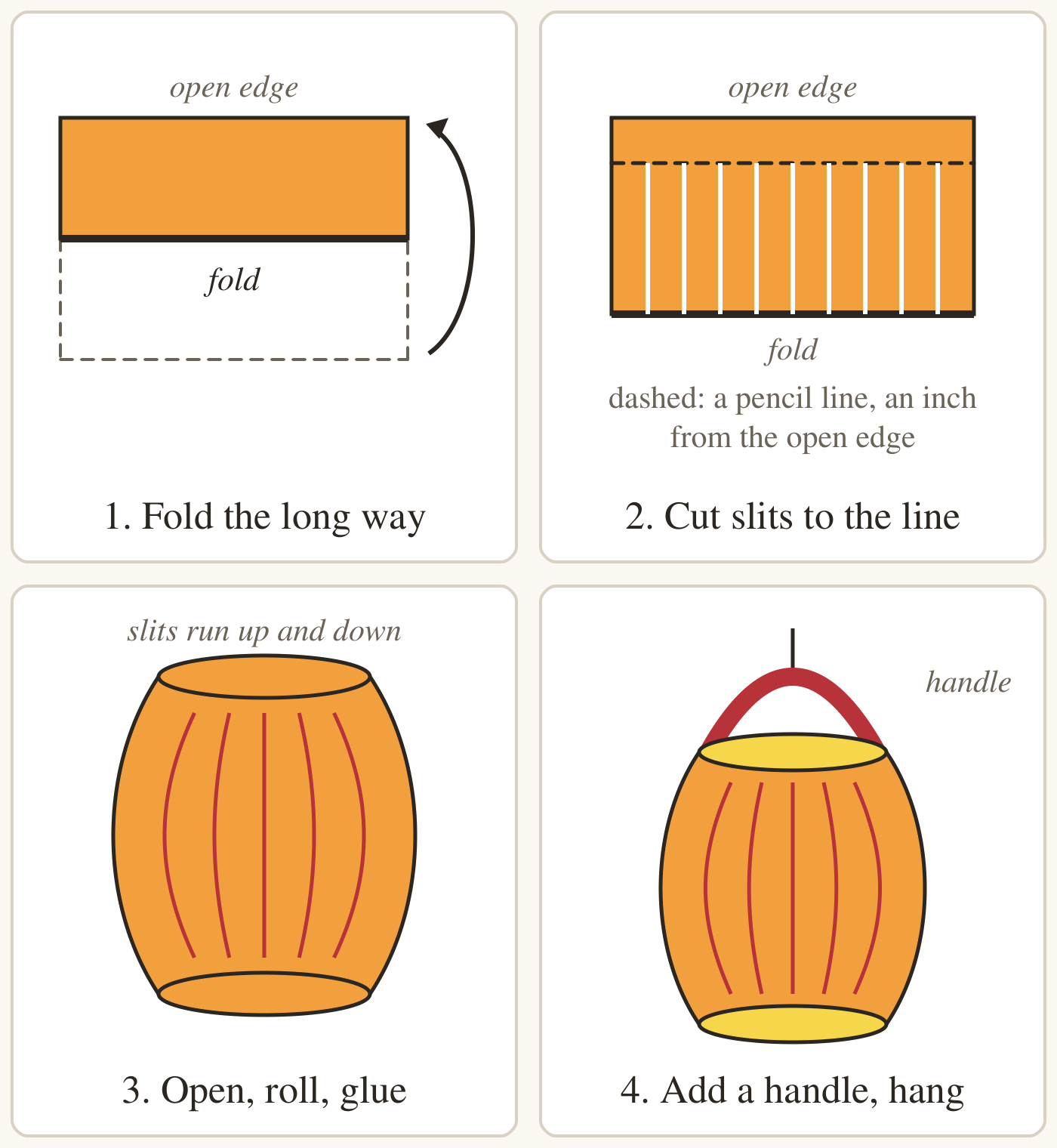
Choti Diwali, "little Diwali", is the night before the main one, and in many homes the lights start going up. In Maharashtra, many homes hang an akash kandil, a "sky lantern", outside the door. A child's version takes about ten minutes:
- Fold a rectangle of colored paper in half the long way.
- Cut slits from the fold toward the open edge, stopping about an inch short.
- Open it out, roll it into a tube so the slits run up and down, and glue the edges.
- Glue a strip across the top as a handle, and hang it by the window.
The one thing that goes wrong is cutting right through to the edge, which leaves a pile of paper strips instead of a lantern. Draw a pencil line an inch from the edge first, and stop the scissors there.
Light two lamps tonight and tell chapters three and four: Hanuman's great leap, and the bridge of stones.
Tonight's small win: the first light of the festival hanging in the window, made by hand.
Night three, Lakshmi Puja: draw a rangoli at the door
This is the main night of Diwali, Sunday 8 November in 2026. Many families welcome Goddess Lakshmi with a rangoli at the entrance, and it is often the activity children remember longest.
Keep it small and keep it simple: a grid of dots, three rows of three, joined with curves into petals, with a circle in the middle. Fill the shapes with colored rice or with flower petals. For the rice, shake it in a sealed bag with a few drops of food coloring and a splash of vinegar, then spread it on a tray to dry overnight. Make the rangoli to one side of the doorstep, not where the door swings: one draft can send half a peacock down the hallway. The seven mistakes most first rangolis make, and the fix for each, are in our guide to rangoli for kids.
Then light every lamp in the house, the painted one from night one included, and tell the last two chapters: the long battle, and the lamps of Ayodhya that lit Rama's way home.
Tonight's small win: a welcome at the door, and a photo of it before the wind gets a vote.
Night four, Govardhan Puja: build a mountain of sweets
The day after Diwali remembers Krishna lifting Govardhan Hill to shelter the villagers and their cows from days of storms. Many families mark it with Annakut, which means "mountain of food": dishes piled high as an offering, then shared.
At home, a small one works. Put a plate in the middle of the table and let everyone add to it: fruit, dates, a few sweets, whatever is in the house. Build a wide base, or the mountain slides. Then tell the story: when the rain came, Krishna lifted the whole hill and held it up like an umbrella until the storm passed. Small children love being the villagers under a blanket while someone holds up a cushion "mountain" on one finger.
Then share the mountain out.
Tonight's small win: a story they acted out, and a plate everyone had a hand in.
Night five, Bhai Dooj: make a card for a brother or sister
The last day of Diwali is for brothers and sisters, who pray for each other and share a meal. Give it a card.
Fold a piece of card in half and draw a diya on the front. Inside, write one line: something they like about their brother or sister. A child without a sibling can make one for a cousin, a friend or a grandparent. The day is about the people who look out for you.
If the week has had its squabbles, and five busy days usually do, the card is a good place to end them.
Tonight's small win: someone at the table hears why they matter.
Doing it in a classroom
In 2026 the five days run from Friday to Tuesday, across a weekend, so a class can take the same ideas into the week before:
- Monday: the paper lanterns, hung in a row.
- Tuesday: a rangoli on paper, on a grid of dots, in crayon or chalk.
- Wednesday: the story of Diwali, read aloud.
- Thursday: a mountain of fruit to share.
- Friday: a card for someone at home.
Keep real flames out of the classroom. A battery tea light looks just as good inside a paper lantern.
Looking back on the five nights
By Tuesday night there is a painted lamp, a lantern in the window, a photo of a rangoli that did not survive the wind, a plate that was once a mountain and a card on someone's shelf. None of it took long. Put together, it is a Diwali your child helped to make, and that is the kind children remember.
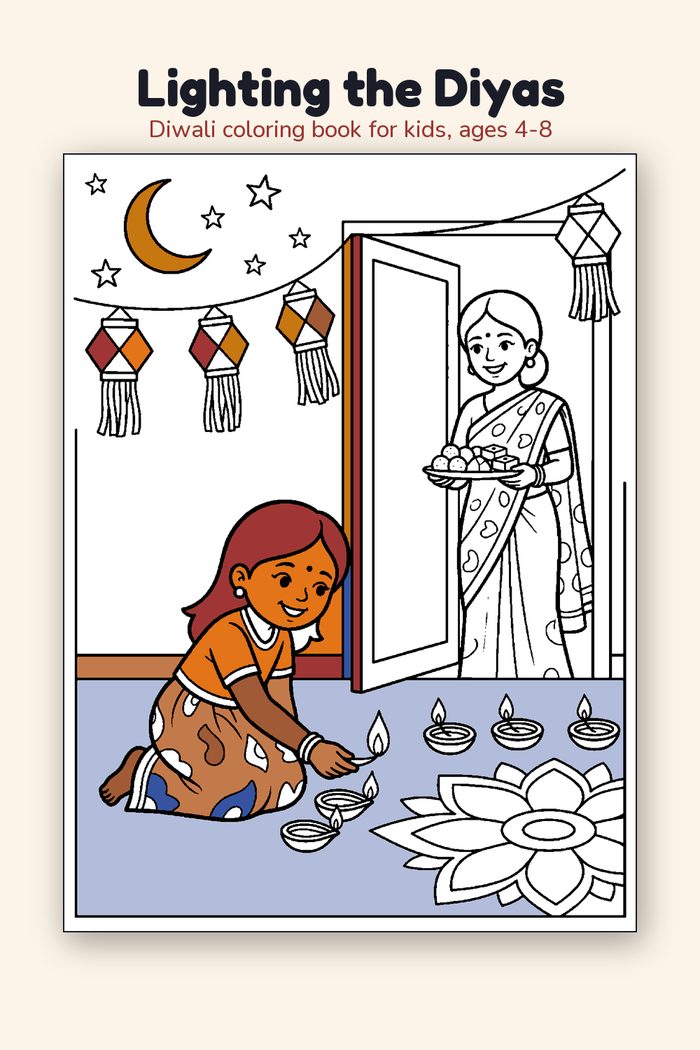
Some evenings will not go to plan. Somebody is tired, the paint is still wet or the rice has not dried. Keep one quiet activity in reserve for those nights: a story and a picture to color. That is what we made our Diwali coloring book for. It opens with a picture of Rama and Sita riding home to a lit-up Ayodhya and the story told simply for ages 4 to 8, then 40 pictures, each one named, from Lighting the Diyas to five rangoli designs that make a gentle practice before the real one on the doorstep. Every picture is printed on one side only, so a finished page can go up in the window on the main night.
Sources
- Diwali 2026 dates: Samvat, Diwali 2026. Dates can differ by a day depending on the calendar your family follows.
- Govardhan Puja and Annakut: Govardhan Puja, Wikipedia.
Frequently asked questions
What are some easy Diwali activities for kids?
Painting a clay diya, making a paper lantern, drawing a small rangoli on a grid of dots, building a "mountain" of sweets for Govardhan Puja and making a Bhai Dooj card. Each takes less than half an hour of active hands-on time, though a painted diya and the colored rice need to dry overnight before they are used.
When is Diwali in 2026?
The main night of Diwali, Lakshmi Puja, is Sunday 8 November 2026. The five days run from Dhanteras on Friday 6 November to Bhai Dooj on Tuesday 10 November, though dates can shift by a day with the calendar your family follows.
What Diwali activities can preschoolers do?
Painting a diya with a cotton bud, filling a simple rangoli with colored rice or petals, and adding fruit to the Govardhan "mountain". Use battery tea lights instead of real flames.
How do you celebrate Diwali with kids at home?
Give each of the five days one small thing and tie it to part of the story: light one more lamp each evening, tell a chapter of Rama's return, and let your child make something they can point to by the end of the week.