
It is easy to think of a coloring book as a way to buy twenty quiet minutes. And it is that, gloriously. But watch a five-year-old color a picture from start to finish and you will see much more going on: a tongue poking out in concentration, a hand learning to control a crayon, a small decision about whether the elephant should be purple, and a burst of pride at the end. The benefits of coloring for kids are real, and most of them come from one thing: finishing a picture they chose.
Benefits of coloring for kids
It builds the hand for writing
Holding a crayon, pressing hard enough to make color, and steering it around a shape uses the same small muscles a child needs to hold a pencil and form letters. Teachers call these fine motor skills. Coloring is one of the most enjoyable ways to practise them, because nobody feels they are practising.
It trains the eyes and hands to work together
Staying inside a line takes coordination between what the eye sees and what the hand does. At four, children scribble happily across the edges. By seven, many are carefully outlining first and filling in after. That progress is hand-eye coordination growing.
It stretches attention, gently
Finishing a picture takes focus. The key word is finishing: a child who completes a page has practised holding attention on one thing from start to end, which is exactly the skill they will need for reading and homework.
It calms the whole family down
Coloring is repetitive, quiet and absorbing. For many children it is a way to settle after school, before bed or during a long wait. For many parents it is the same thing, which is why so many grown-ups end up coloring alongside.
It teaches colors, and the words for them
"Is that a light blue or a dark blue?" "What color is a mango?" Coloring gives a natural reason to name colors and shapes and to talk about the things in the picture.
It gives small decisions to make
Which color for the sky? Should the peacock be realistic or rainbow? A coloring page is full of low-stakes choices, and children rarely get to make as many choices as they would like.
It builds the confidence of finishing
There is a particular kind of pride that comes from holding up a finished picture. It says: I started something and I finished it. That feeling is worth more than any single skill on this list.
It opens conversations
A picture of Rama returning home, of Santa on the roof or of Ganesha with his mouse is a doorway to a story. Some of the best conversations families have happen over a coloring book, because nobody is looking at each other and everybody is relaxed.
How to choose a coloring book by age
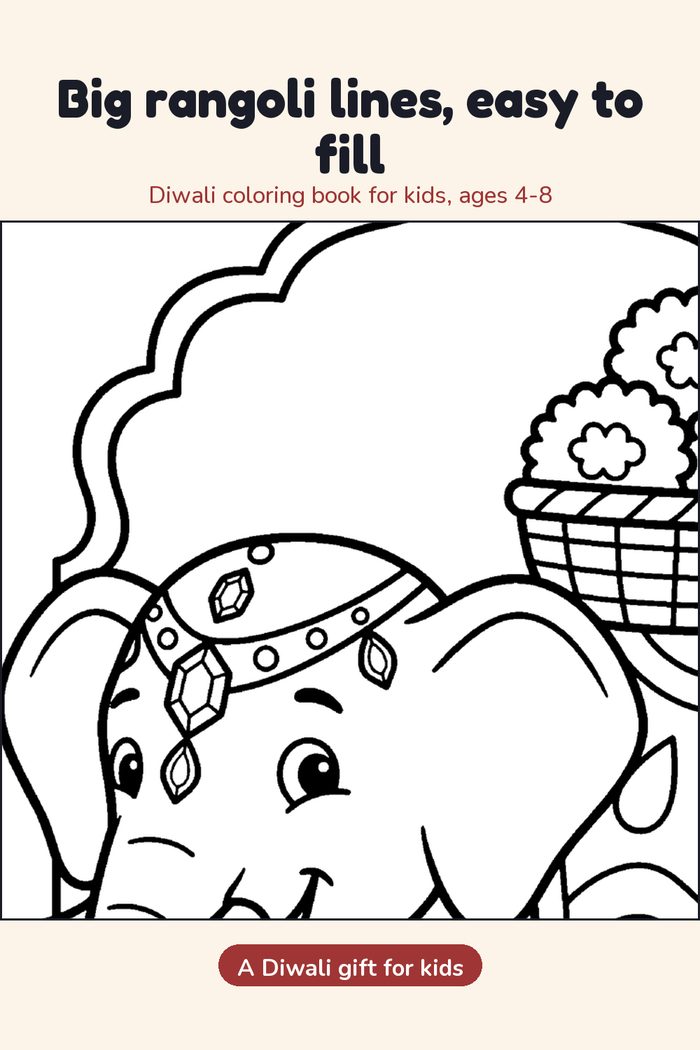
The biggest reason children abandon a coloring book is that the pictures are too hard. Tiny shapes and thin lines are frustrating for small hands, and a picture that cannot be finished is a picture that ends in tears.
- Ages 3 to 5: very thick lines and a few big shapes. Crayons and chunky markers.
- Ages 4 to 8: bold lines, large open shapes and some small detail for older children in the range. This is the "bold and easy" style.
- Ages 8 to 12: more detail, patterns and smaller spaces for colored pencils and fine markers.
A good test: could your child finish one picture in fifteen to thirty minutes? If yes, it is the right level.
How to make coloring a habit that sticks
- Let them choose the picture. A picture they picked is a picture they will finish.
- Do not correct the colors. A green sun is a creative decision, not a mistake.
- Color with them. Children stay longer when a grown-up sits alongside.
- Talk about the picture, not the neatness. "Tell me about this elephant" beats "stay inside the lines."
- Display the finished ones. A fridge gallery says the work was worth doing.
- Protect the next picture. Use single-sided books, or slip card behind the page, so markers never ruin the next one. Our guide to markers that don't bleed through explains more.
Coloring with a story
Children color longer when the picture means something. That is why every Inkpot Lane coloring book comes with a story: a classic poem, the tale of Rama and Sita, or the story of Ganesha and a small lesson on every page. Every picture is printed on one side only, so finished pages can be torn out and displayed.
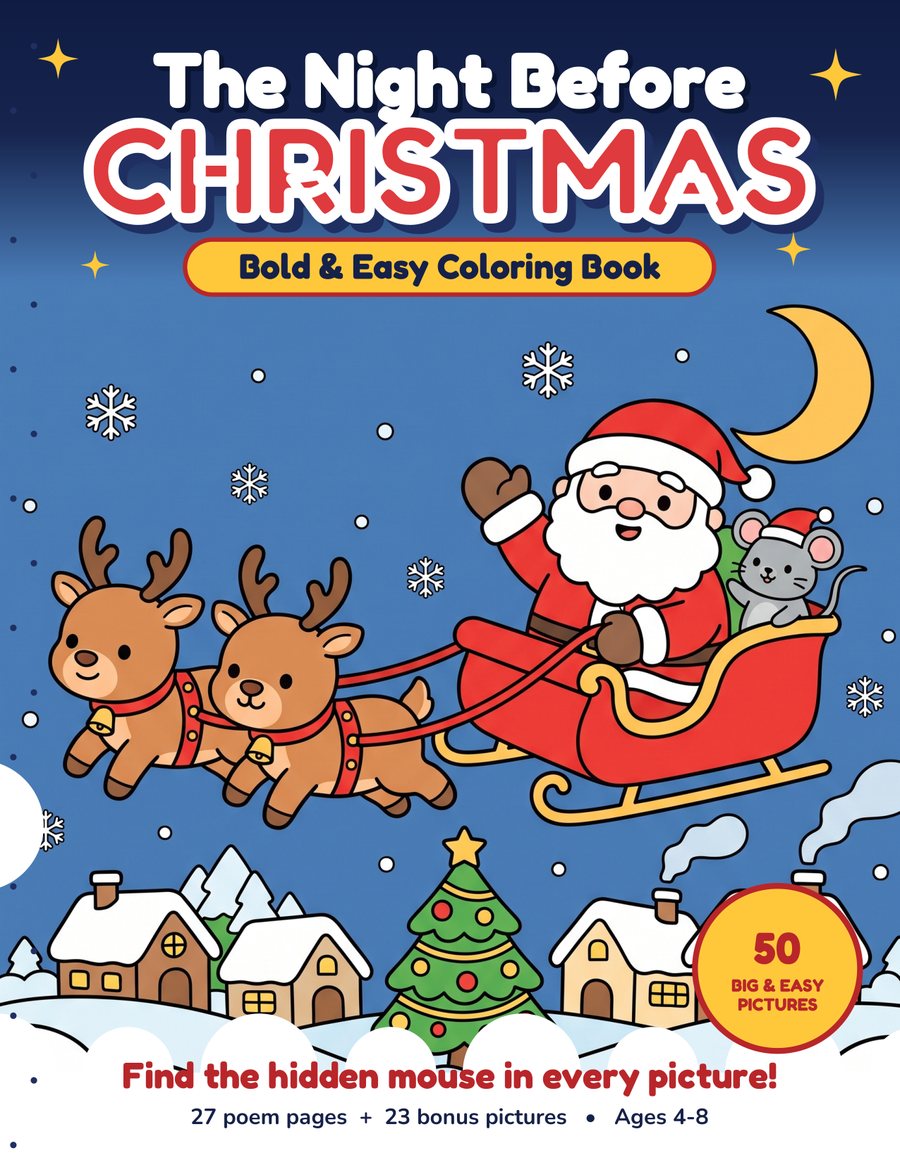
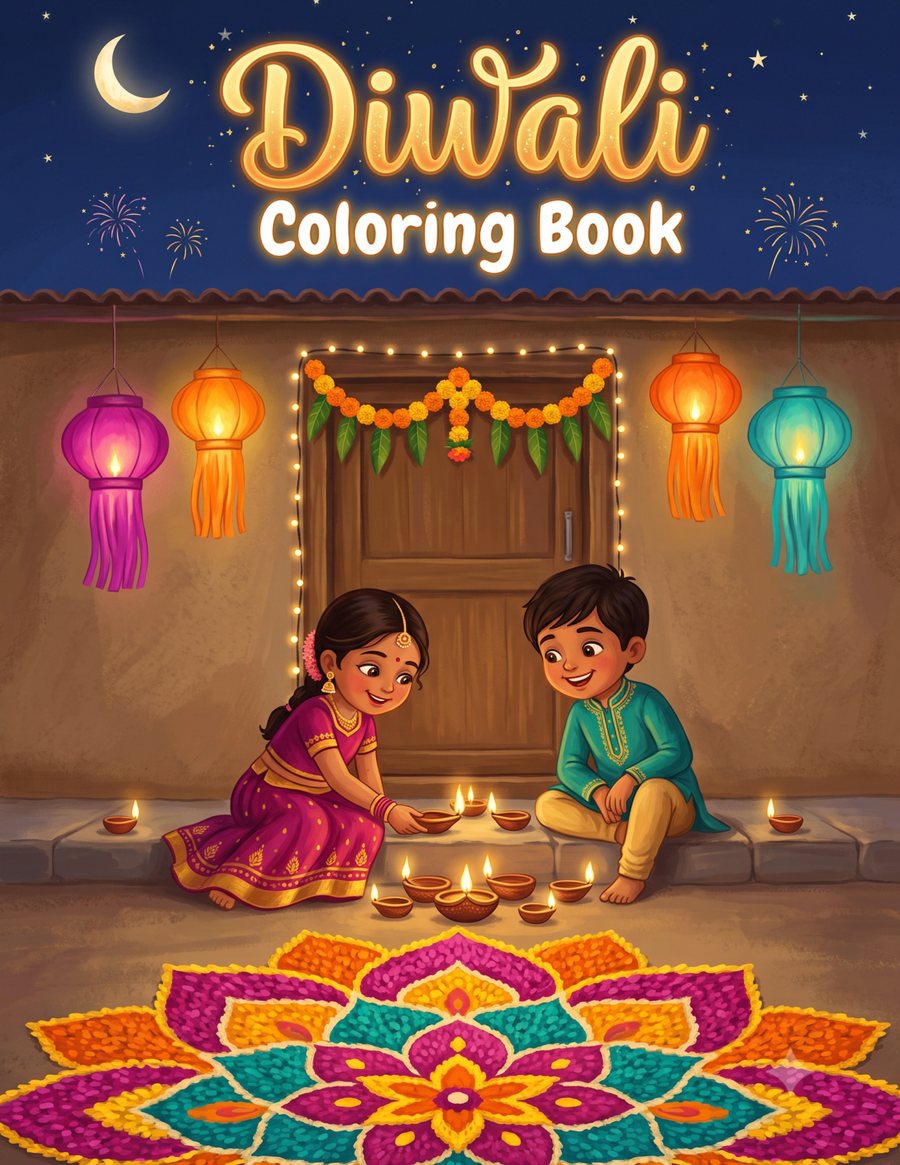
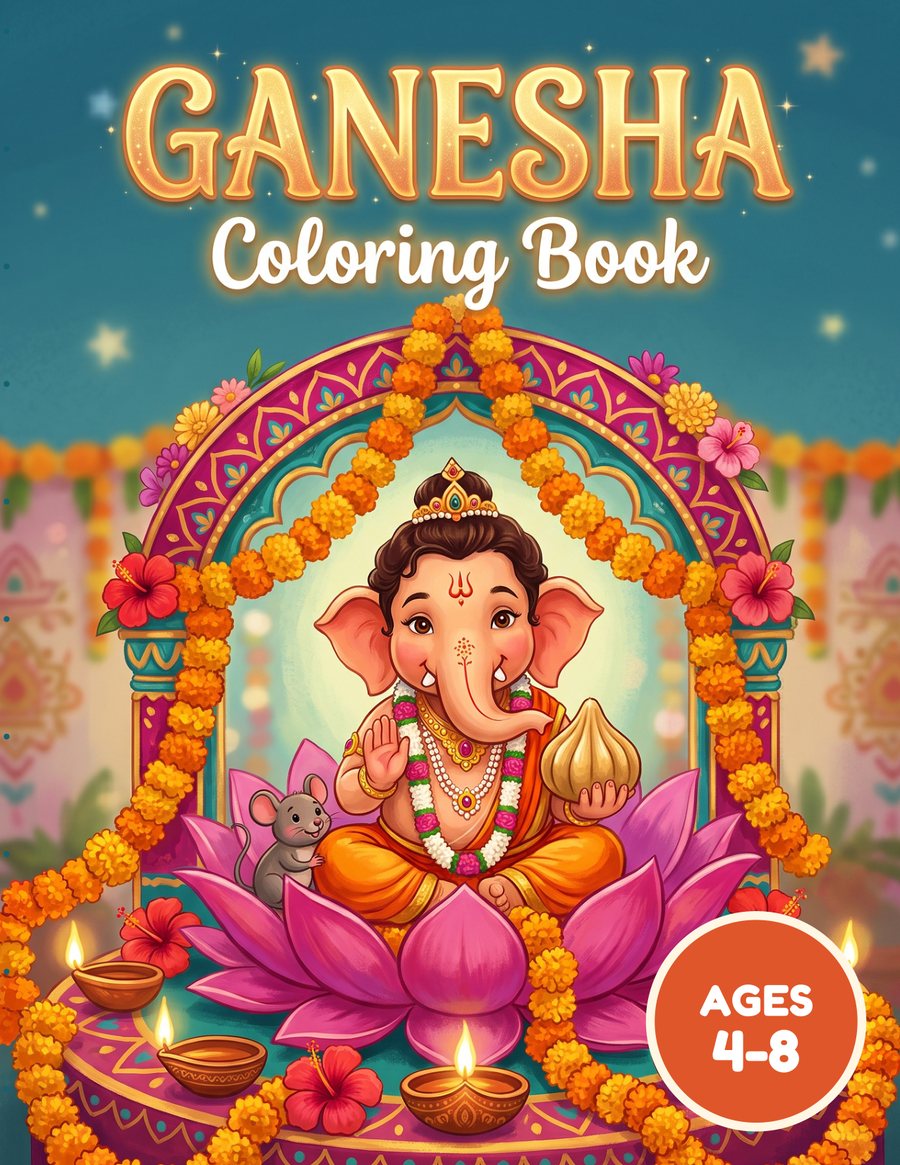
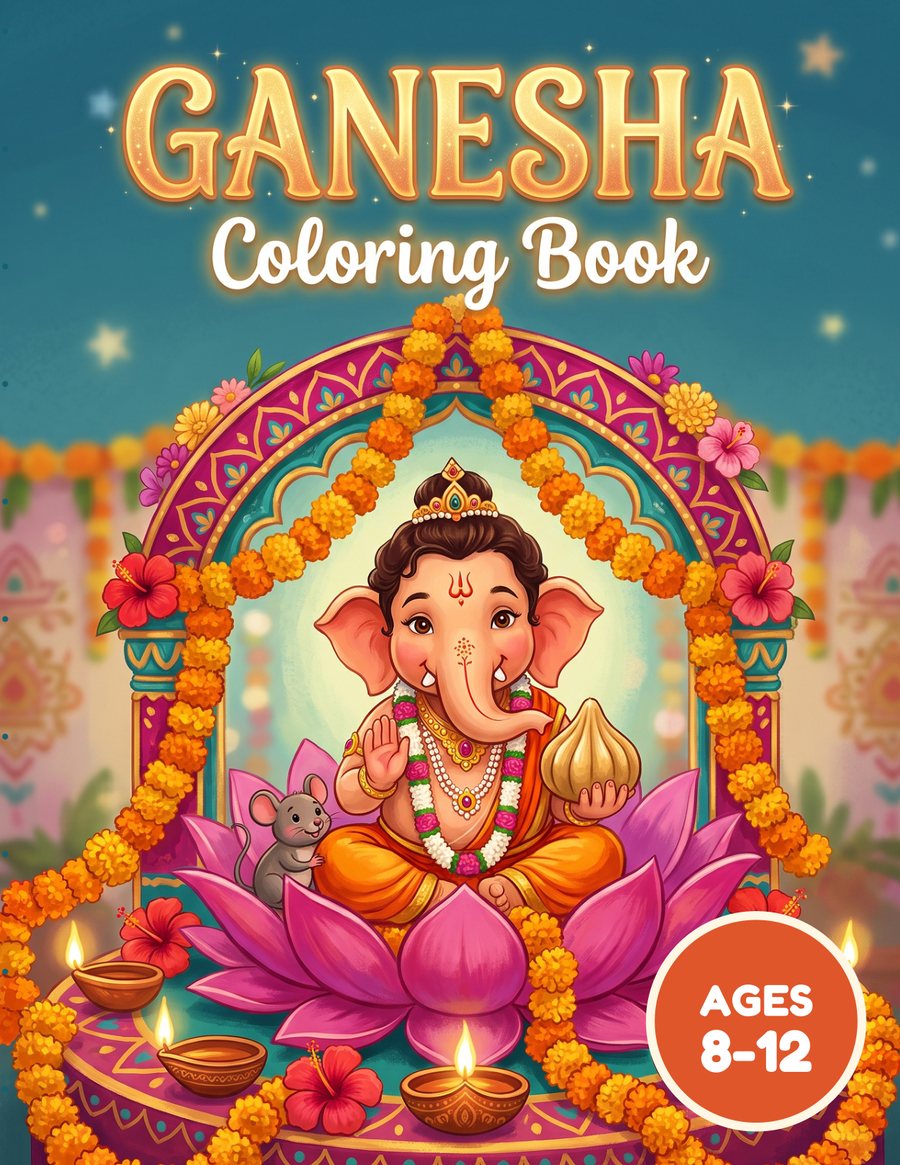
If you want the stories themselves to read aloud, start with the Night Before Christmas poem, the Diwali story for kids or the Ganesh Chaturthi story for kids.
Frequently asked questions
What are the benefits of coloring for kids?
Coloring strengthens the small hand muscles used for writing, builds hand-eye coordination, stretches attention span, helps children calm down, teaches colors and new words, and gives them the confidence of finishing something.
At what age should kids start coloring?
Most children can start scribbling with chunky crayons from around 18 months to 2 years. Simple, thick-line coloring pages work well from about age 3.
What kind of coloring book is best for a 5-year-old?
A bold and easy coloring book, with thick lines and large shapes, so the child can finish a picture in one sitting. Single-sided pages are best if they use markers.
Is coloring good for handwriting?
Yes. Coloring uses the same grip and small muscles as writing, so it is a playful way to build the hand strength and control children need for handwriting.