
There is a particular moment after someone you care about has surgery: you hear that the operation is over, you know they will be spending some time at home, and you want to do something useful. Flowers, balloons and traditional get-well gifts are easy to reach for, but the better question is what their ordinary hours at home will actually be like. If you are searching for gifts for someone recovering from surgery, start with the shape of one slow day rather than the shelves of a gift shop.
The short answer: Picture one ordinary day at home and choose something that fits a part of it: something useful within reach, something quiet for a long afternoon, a meal or message for the evening, or practical help that saves them a task. A long charging cable, a lap tray, an audiobook, a large-print puzzle book, a notebook by the bed, or a specific offer of help can all work. Ask before sending food or flowers, and choose things that do not create extra work.
Gifts start with the day, not the shop
A recovery at home is not one long event. It is a string of ordinary days, and what feels useful can change from one part of the day to the next.
So before choosing anything, find out a few plain things, gently, from them or from whoever is looking after them:
- Where will they spend most of the day? The sofa, a bed, a favorite chair?
- Are there any practical restrictions you should know about? You do not need medical details; you only need to know whether a particular gift would be awkward to use, carry or store.
- Are food or flowers welcome? Ask rather than guess, especially if you are sending something directly to the house.
- Who else is helping? If three people are sending soup, the fourth pot of soup is less useful than a walk for the dog.
With those answers, walk through their day.
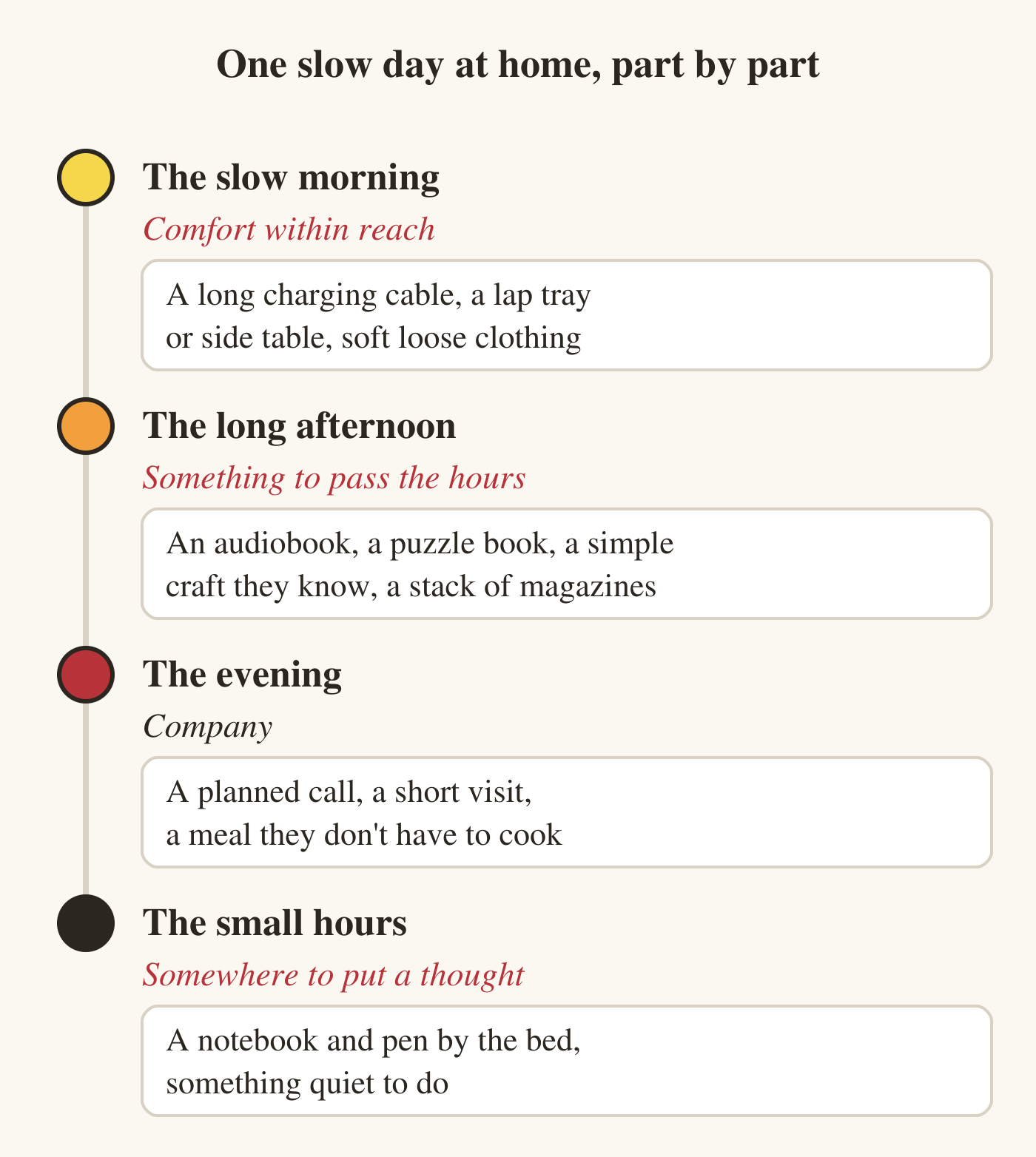
The slow morning: comfort within reach
If mornings are slow, practical gifts can earn their place simply by keeping everyday things close at hand:
- An extra-long phone charging cable, so the phone can charge while it sits right beside them instead of across the room.
- A lap tray or a small side table for a cup, a book and the remote.
- Soft, loose clothing they already like to wear, if you know their size and preferences well enough to choose it confidently.
None of these is exciting, and that is fine: their value is in being useful again and again.
The long afternoon: something to pass the hours
A long afternoon is where low-effort entertainment earns its place, and where gifts for someone recovering from surgery can be the most personal. Instead of choosing something that demands sustained attention, think about what they already enjoy and make it smaller, simpler and easy to put down:
- An audiobook or podcast they would like, or a month of an audiobook subscription, so they can listen with their eyes closed.
- A puzzle book they can put down at any moment. Look for short puzzles, clear large print and no pressure to finish (the large-print one we make for exactly these afternoons is Rest and Recover).
- A small, simple craft they already know, such as a knitting project that is already cast on. Avoid anything with lots of fiddly parts to spread across a bed.
- A stack of magazines about their interests, because an article is short enough to finish.
The common thread is that nothing should feel like homework. A good afternoon gift can be picked up for ten minutes and put down without guilt.
The evening: company
By evening, they may want company, or quiet. If they do want company, it does not have to arrive in a box.
- A planned phone or video call, at a time you agree on, so they have something to look forward to.
- A short visit, if they want one. Keep it brief unless they ask you to stay longer, and offer to make the tea yourself rather than creating another job for them.
- A meal they don't have to cook, in a container that doesn't need to go back, or a meal delivery voucher. Check the diet question first.
If you live far away, a handwritten letter or a box of cards from friends, to open one a day, carries the same message: someone is thinking of you tonight.
The small hours: somewhere to put a thought
If they happen to be awake at 3 a.m., two quiet things can sit ready on the bedside table.
The first is a small notebook and a pen that lives by the bed, so the questions that turn up in the night can be written down for the next appointment instead of held in the head until morning.
The second is something quiet to do, kept on the bedside table: a puzzle book, or an audiobook ready to play on low.
The gift that isn't a thing
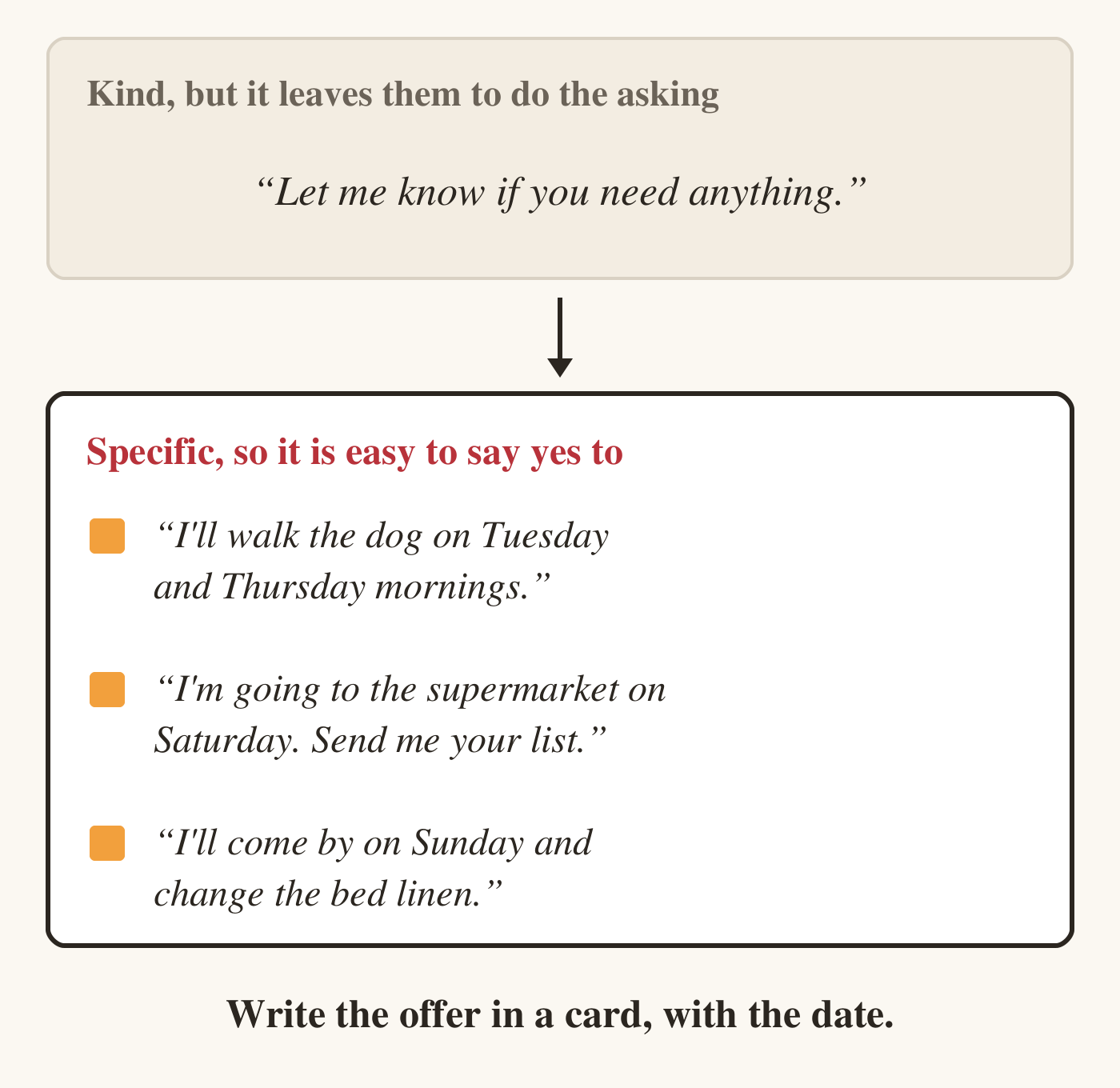
Often the most useful thing you can give is your time, offered in a specific way. "Let me know if you need anything" is kind, but it leaves them to do the asking. A specific offer is easier to say yes to:
- "I'll walk the dog on Tuesday and Thursday mornings."
- "I'm going to the supermarket on Saturday. Send me your list."
- "I'll come by on Sunday and change the bed linen."
Write the offer in a card, with the date. It is a gift they can hold onto, and a promise they can actually take up.
A book for the long afternoons
We made Rest and Recover for the afternoon and the small hours in that walk-through. It is a large-print activity book for the days after surgery, and it opens with a note that describes exactly those stretches: the sofa, the extra hours, the screen that feels like too much.
Inside are 40 easy word searches, all on the same 11 x 11 grid, with gentle themes such as A Cup of Tea, Rain on the Roof and A Cat on the Lap. When every word is circled, the leftover letters spell a small message; the first one reads "A quiet day need not prove anything." There are 24 cryptograms, each with five letters already filled in, and eight quiet write-in pages, including Small Wins, The People Who Checked On Me and Questions for My Next Appointment. The answers are at the back, in large print like everything else.
It is honest about what it is. The book says it is for gentle pastime only, not medical, pain or recovery advice, and it makes no promises about how anyone will feel. It is simply something kind to leave on the side table.
One last thing to put in the bag
Whatever you choose, add a card, and write in it something that asks nothing back. Not "get well soon" with a deadline hidden in it, but something like: take all the time you need. A card like that asks for nothing in return.
Frequently asked questions
What is a good gift for someone recovering from surgery at home?
Something that fits the hardest part of their day. Useful ideas include a long charging cable, a lap tray, a meal they do not have to cook, an audiobook, a large-print puzzle book, a notebook for the bedside, or a specific offer of your time, such as walking the dog on set days.
Should I send flowers to someone after surgery?
Ask first. Flowers can be lovely if the person wants them, but they also need somewhere to go and someone to look after them. If you are unsure, a card, a book or another low-maintenance gift is a simpler choice.
What should I avoid giving someone who is recovering from surgery?
Avoid anything heavy they would need to lift, food that may not suit their diet, and gifts that create work, such as a complicated craft kit or a plant that needs repotting. When in doubt, ask them or the person looking after them.
What can I give someone recovering from surgery who lives far away?
A planned video call, a handwritten letter, an audiobook subscription, a meal delivery voucher, or a book posted straight to their door.
Is a puzzle book a good get-well gift?
It can be, if it is easy to pick up and put down. Look for short puzzles, clear large print and answers in the back. In Rest and Recover, every word search uses the same easy 11 x 11 grid and every cryptogram starts with five letters given, so nothing needs to be finished in one sitting.