Inkpot LaneFree puzzle packFree puzzles
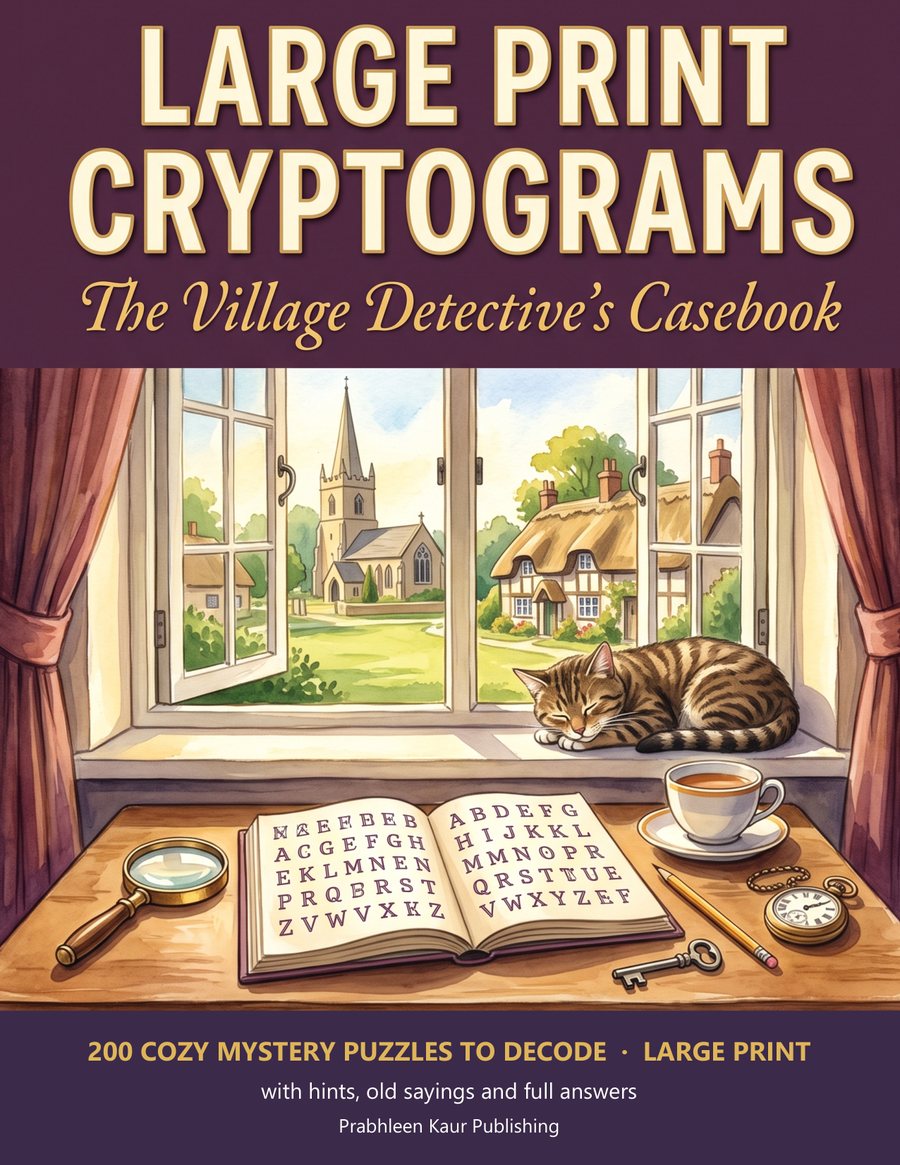
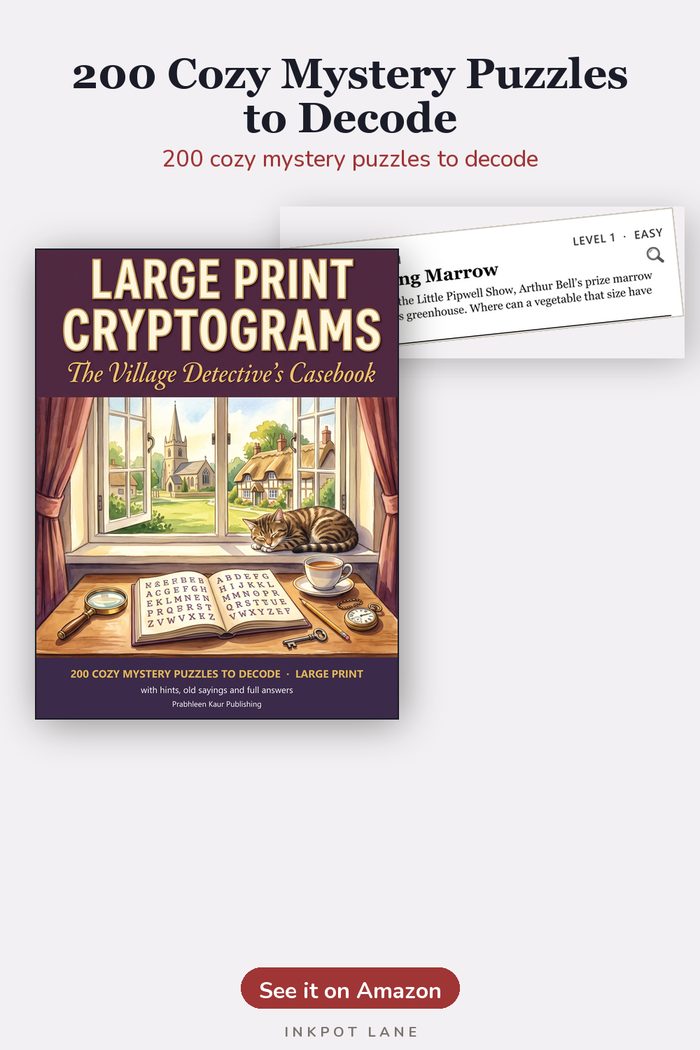
Cover of Large Print Cryptograms: The Village Detective's Casebook

Large print cryptograms

Large Print Cryptograms: The Village Detective's Casebook

200 Cozy Mystery Puzzles to Decode, with Hints, Clues, Old Sayings and Full Answers

A retired postmistress's casebook in code: 200 cozy puzzles, from three letters given to none.

Buy on AmazonPrinted and shipped by Amazon. Opens the book’s Amazon page.
  • 114-page paperback, 8.5 x 11 inches
  • 200 puzzles in 20 cases
  • Code letters in 19 pt, with a line to write on
  • Four levels: three letters given, then two, one and none
  • Every answer at the back

A look inside

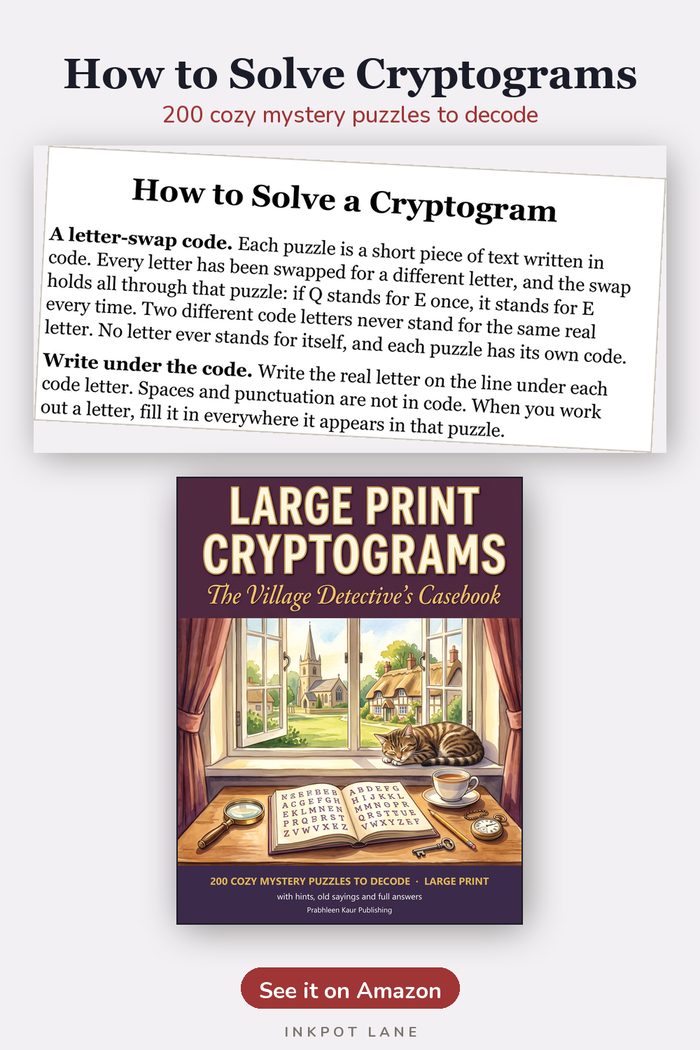
How to Solve Cryptograms
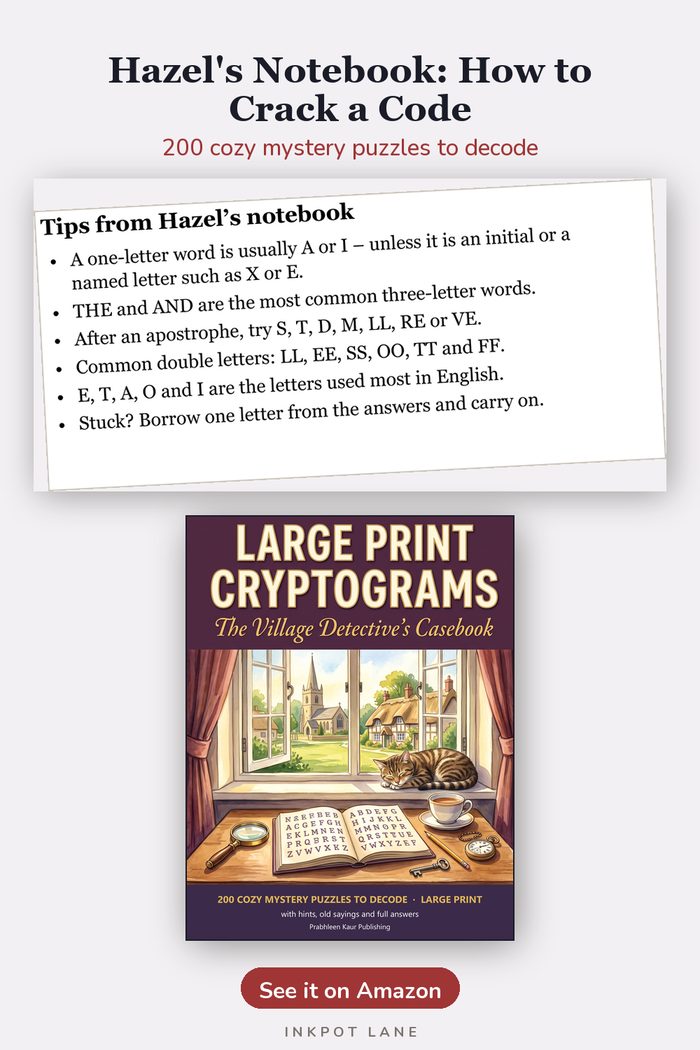
Hazel's Notebook: How to Crack a Code
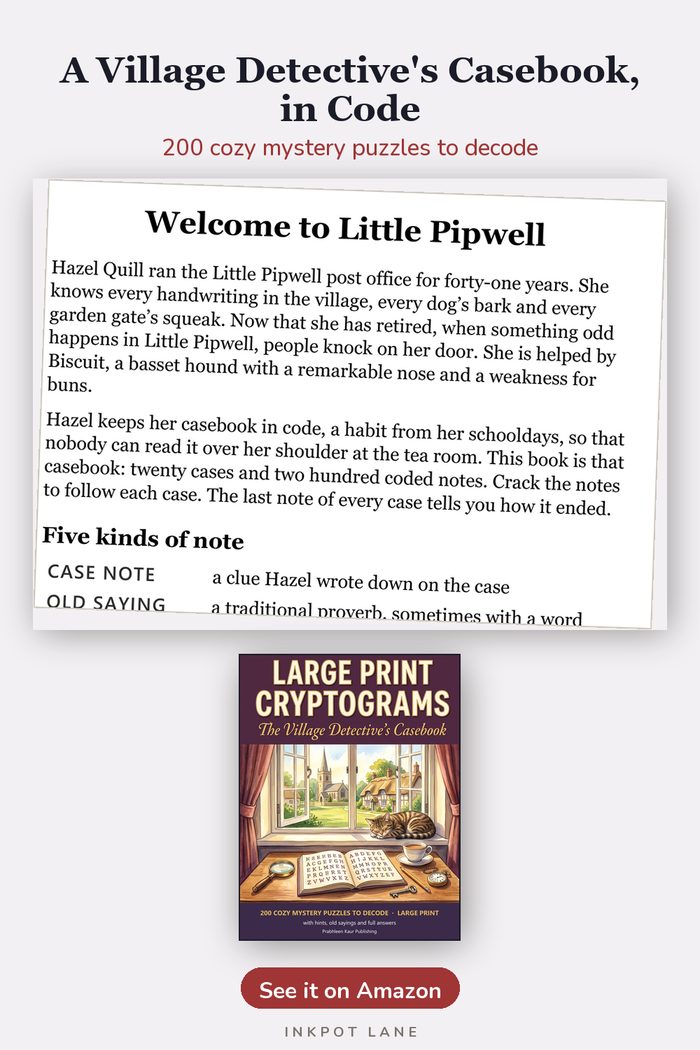
A Village Detective's Casebook, in Code
200 Cozy Mystery Puzzles to Decode

Who it's for

Cryptogram fans who want print they can read comfortably, and newcomers who would like to be eased in. Hazel Quill ran the Little Pipwell post office for forty-one years. Now retired, she keeps her casebook in code, a habit from her schooldays, so nobody at the tea room can read it over her shoulder. This book is that casebook: twenty gentle village cases in 200 coded notes, from a missing prize marrow to a snowman that moves by night. The last note of every case tells you how it ended.

Inside the book

  • The front pages. How to Solve a Cryptogram, with Hazel's six tips; a worked example shown coded, half-solved and solved; and Welcome to Little Pipwell, which introduces the village and the kinds of note.
  • 20 cases, 10 notes each, every case opening with its case file and a short set-up. Across the book there are 80 case notes carrying the clues, 40 traditional old sayings, 20 of Hazel's rules for detectives, 40 curious true facts, and 20 Case Closed notes, one to end each case.
  • Four levels. Cases 1 to 5 give three letters in every puzzle, 6 to 10 give two, 11 to 15 give one, and 16 to 20 give none. Given letters are listed at the top of each puzzle and already written in.
  • Large print throughout. Every code letter is 19 point and sits over its own write-in line, with two or three puzzles on almost every page and room for notes.
  • The answers at the back, grouped by case, in 17 point type.

How to use it

  • Start from the given letters. They are already written in wherever they appear.
  • Try the short words next. A one-letter word is usually A or I, and THE and AND are the most common three-letter words.
  • Remember the house rule. No letter ever stands for itself, and each puzzle has its own code.
  • Stuck? Borrow a letter. Look one up in the answers and carry on.

Frequently asked questions

How big is the print?

Every code letter is 19 point. From the contents page on, every word of the instructions, the case set-ups and the answers is 16 point or larger.

I've never done a cryptogram. Can I start here?

Yes. The how-to page and the worked example come first, and the first five cases give you three letters in every puzzle.

How hard does it get?

The given letters drop from three to none, and the notes grow longer as you go.

Are the answers included?

Yes, for all 200 puzzles, grouped by case.

Is it a crime book?

No. It is cozy, not crime: nobody is hurt, and there are no police and no villains.

How big is the book?

8.5 x 11 inches, 114 pages, printed in black ink.

See it on Amazon

Read more

More from Inkpot Lane

Large Print Cryptograms: The Village Detective's CasebookBuy on Amazon